

Getting Ready for Heating Season: How Dry Indoor Air Changes What Your Skin Needs
Table of Contents
The furnace turns on, and your skin notices
Every fall there is a moment, in Québec and across Canada, when the furnace starts for the first time. It feels like comfort. For your skin, it marks the start of the driest months of the year, and it begins well before the first snowfall.
Most fall advice talks about the cold outside. But we spend most of our time indoors, and the air inside a heated Canadian home is often far drier than the air outside.
Why heated air is so dry
Cold air can hold very little water vapour. When it comes indoors and is warmed, it keeps the same small amount of water, but warmer air could hold much more. So its relative humidity drops. Air at −10 °C, warmed to 21 °C, can fall to around 10 % relative humidity if nothing adds moisture back. Cooking, showers and houseplants help a little, but many homes still sit between 15 and 30 % all winter.
Your skin is in constant exchange with that air. Water moves from the deeper layers toward the surface and evaporates, a natural process called transepidermal water loss (TEWL). The drier the air, the faster it goes. When skin loses water faster than it can hold on to it, it feels tight, looks dull, can flake, and often feels more sensitive than usual. The face and hands show it first, because they are exposed to indoor air all day.
Two kinds of care your skin needs in dry air
Skincare ingredients that help with dryness work in two complementary ways:
- Humectants attract and bind water. Hyaluronic acid is the best known: one molecule holds many times its weight in water.
- Emollients and nourishing lipids soften the skin and form a light, breathable film that slows evaporation. Squalane, plant oils and butters are examples.
In very dry air, a humectant used on its own has less moisture to draw from. That is why the order matters: bring water in, then help it stay. Each step below is chosen for that reason.
Adjusting your routine for heating season
Step 1. Cleanse gently, with lukewarm water
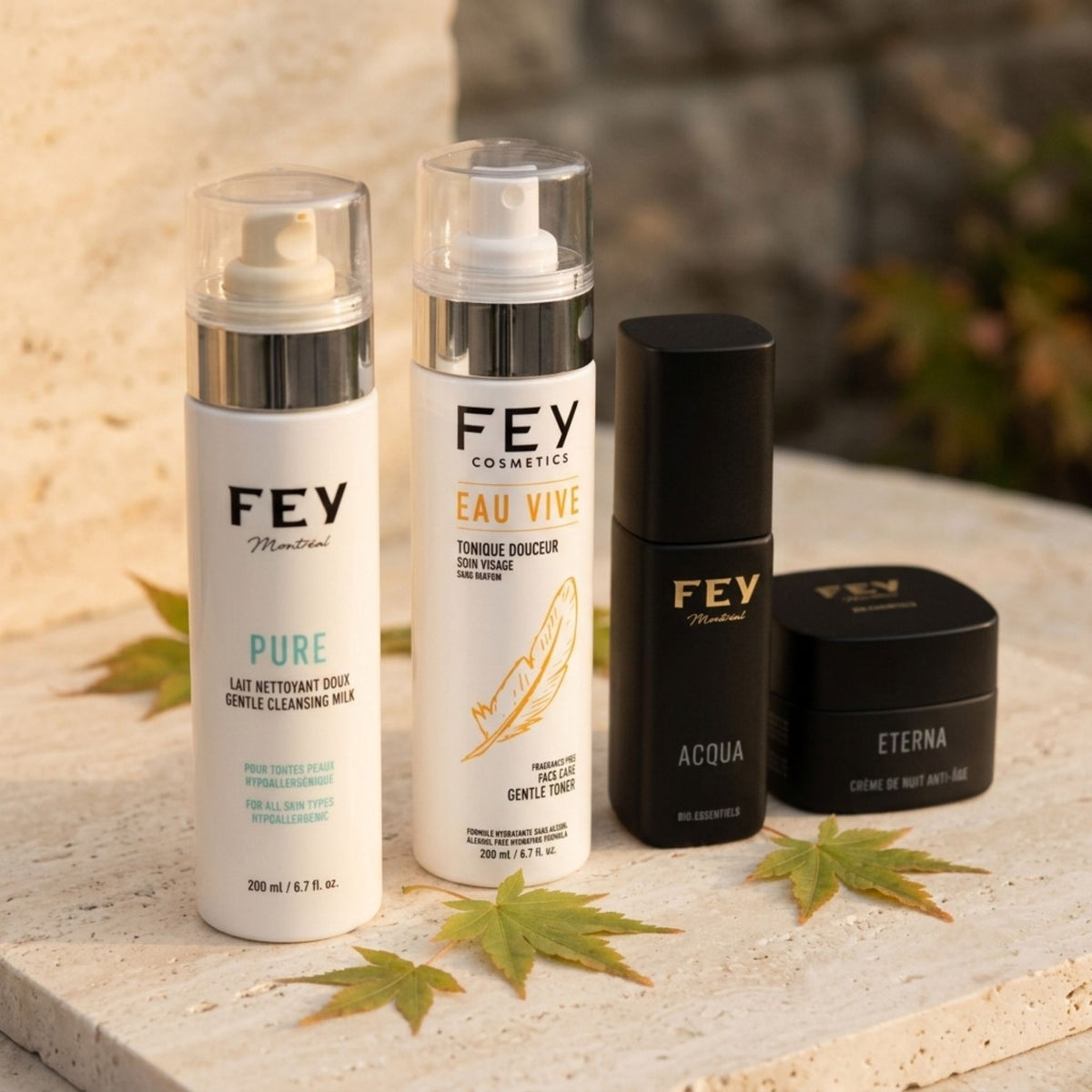
Hot water and harsh cleansers remove the skin's own lipids just when it needs them most. PURE Gentle Cleansing Milk, with baobab and avocado oils, cleanses without leaving skin feeling stripped. Rinse with lukewarm water and pat dry, leaving the skin slightly damp.
Step 2. Rehydrate right away with a toner
Apply EAU VIVE on still-damp skin. In heating season, the Comforting version, made with cloudberry (chicouté) and Agastache mexicana, is alcohol-free. It eases the feeling of tightness after cleansing and helps skin hold on to moisture.
Step 3. Layer hydration with ACQUA
ACQUA combines hyaluronic acid with aloe vera, sea kelp, vitamin C and meadowfoam seed oil. It draws water into the upper layers of the skin and leaves it looking plumper and smoother. Apply it while the toner is still fresh on the skin.
Step 4. Seal it in, morning and evening
- Morning: PERLE Day Cream nourishes with sacha inchi, rich in omegas 3, 6 and 9, plus baobab and hyaluronic acid. It keeps skin comfortable through a day of dry, heated air. Then apply a sunscreen: winter sun is still there, and fresh snow reflects up to 80 % of UV rays.
- Evening: ETERNA Night Cream pairs natural squalane, a lipid very close to the skin's own, with niacinamide, organic rosehip and hyaluronic acid. Skin is nourished overnight and looks rested by morning.
Body, hands and the air itself
BRUME Comforting Body & Hair Mist, with hyaluronic acid and the scent of Nordic cloudberry, brings quick moisture to arms, legs and hands during the day. In the room where you sleep, a humidifier makes a real difference. Health Canada recommends keeping indoor humidity between 30 and 50 %. Aim for the upper part of that range in fall, and come down a little in deep cold if your windows start to fog, to avoid condensation and mould. Short, lukewarm showers help too.
Why a few well-designed products are enough
FEY deliberately keeps a small range. Each formula does one job well and is designed to be layered with the others. EAU VIVE, ACQUA and BRUME bring water in. PERLE and ETERNA, with their plant lipids and squalane, help keep it there. Used together, they cover the daily needs of skin in heating season, with no extra steps to buy. The one product to add is a sunscreen.
Every formula follows our ingredient black-list: no glycols, silicones, sulfates or artificial preservatives. Our products are rated 100/100 on Yuka. FEY skincare is made in Montréal, Canada.
Resilient skin, all heating season long
You don't need to change everything the day the furnace starts. A few deliberate steps, taken before dryness sets in, mean you reach January with skin that has been supported all along.
Shop the routine: The Fall Reset Ritual brings together PURE, EAU VIVE (your choice), ACQUA and ETERNA, at 30 % off. Add PERLE Day Cream for the morning and BRUME Comforting for the body.
Read next: Dry vs. dehydrated skin · The ultimate guide to hyaluronic acid · How to care for dry skin this winter · Our fall skincare routine
Frequently asked questions
What indoor humidity is best for skin in winter?
Health Canada recommends 30 to 50 % relative humidity indoors. Skin feels most comfortable toward the upper part of that range, but in very cold weather a slightly lower level avoids condensation on windows.
Why does my skin feel tighter once the heating is on?
Heated air has very low relative humidity, so water evaporates from the skin faster (transepidermal water loss). Skin then feels tight and can look dull or flaky.
Should I still use hyaluronic acid when the air is very dry?
Yes, as part of a routine. Apply it on damp skin, then follow with a cream rich in lipids, such as squalane or plant oils, to help keep that water in the skin.